The Bwindi gorilla habituation experience, four hours with a family
The standard gorilla trek gives you one hour with a family. In Bwindi's Rushaga sector, the habituation experience stretches that to as many as four hours, with a family that is still getting used to people. It costs more and asks more of your legs, and none of our five tours includes it.
What habituation means
Every gorilla family you can visit in Uganda was once wary of people. Habituation is the slow work of getting a family used to humans nearby, so that researchers and, later, visitors can spend time with it calmly.
In Bwindi's Rushaga sector, the Uganda Wildlife Authority (UWA) lets a few visitors join that work. You go out with researchers and trackers to a family still in the process, rather than one that already accepts visitors every day.
About half of the world's roughly 1,000 mountain gorillas live in Bwindi Impenetrable National Park. It is the only park in Uganda that offers this longer visit.
Four hours against one, side by side
The two visits share a forest and a briefing, but little else. The table compares the standard trek with the habituation experience on the points that change your plans.
| Standard trek | Habituation experience | |
|---|---|---|
| Permit, foreign non-residents | $800 | $1,500 |
| Time with the gorillas | Up to 1 hour | Up to 4 hours |
| Where | Bwindi's four sectors or Mgahinga | Bwindi's Rushaga sector only |
| Who you walk with | Rangers and trackers | Researchers and trackers |
| Group size | Up to 8 visitors per family a day | Very few permits a day |
| On our five tours | Included on tours 1, 2, 4 and 5 | Not included on any |
The fee gap is $700 per person before anything else changes. Both fees are set by the UWA and can change, so check them before paying, as our gorilla permit guide explains.
How the family behaves
A family under habituation is less settled around people than one visited daily. It may move away through dense growth or show that it is uneasy, and the trackers read those signs as part of their job.
That is the appeal for many visitors. Instead of a family that ignores you, you watch trust being built, with researchers explaining what they see. Nobody can promise how close you get or what the family does during those hours.
The rules do not loosen. The 7 meters (23 feet) distance and the rule against trekking when ill still hold, and your ranger has the final say. Our guide to the gorilla trekking rules explains each one.
A long day in a steep forest
Four hours with the family come on top of the walk to find it, and that walk can already take much of a standard day. In Bwindi it crosses steep, muddy ground through thick vegetation, at roughly 1,160–2,600 meters (3,800–8,500 feet).
You cannot pick where the family is on the day. Expect to be in the forest for many hours, with a packed lunch and plenty of water. To gauge whether your legs are up to it, read our page on how hard the trek is.
Porters can be hired at the park gate for a set fee, and on a day this long they make a big difference. Besides carrying your bag, they steady you where the ground gets steepest.
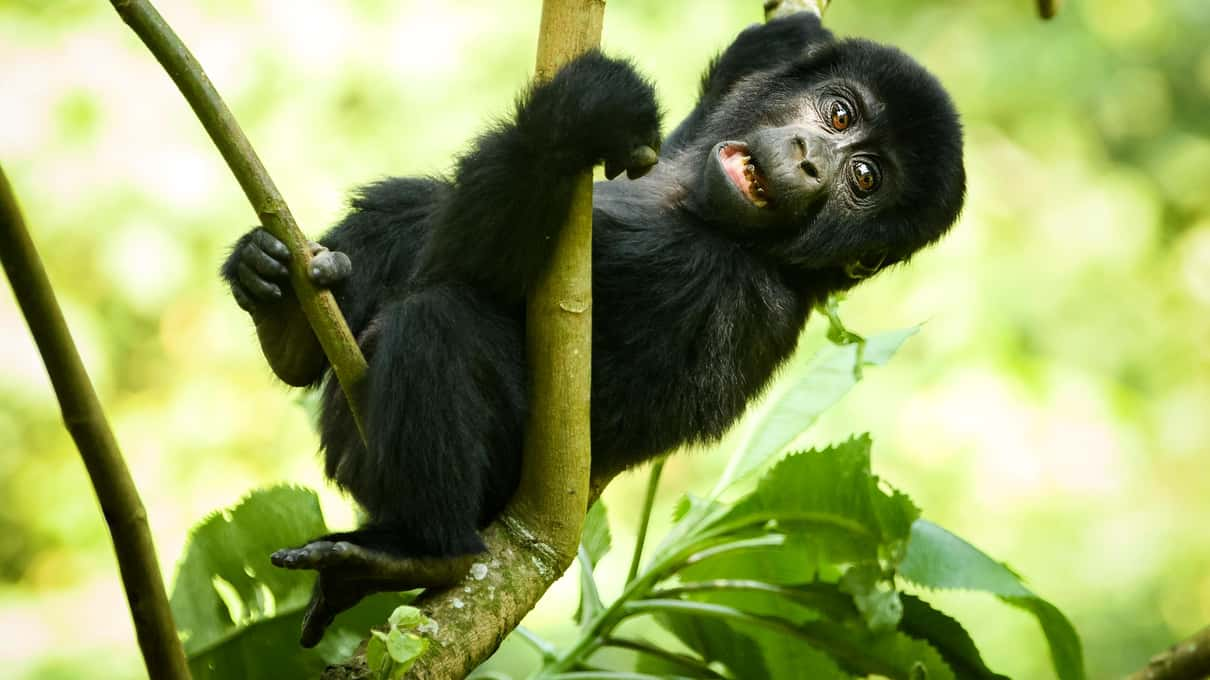
Who the longer visit suits
Four hours in the forest is a different trip from one, and it pays off for some people more than others. These are the travelers who tend to get the most from it.
- Photographers who want more than an hour to work with shifting light and positions
- People with a researcher's curiosity about how gorilla families are studied
- Strong walkers happy to spend most of a day on steep forest slopes
- Travelers who have done a standard trek before and want something new
It suits fewer people than the standard trek. If you doubt your fitness, or if the extra $700 strains the budget, one hour with a settled family still gives you the encounter most people come for.
How to book it through an operator
None of our five tours includes the habituation experience. Operators can often arrange it, though, and the simplest route is to ask one that already treks from the Rushaga area to swap the standard trek for it.
Dav Safaris' 3-day trip at ~$2,600 fits that brief, since its first night is at a lodge in the Rushaga area. The standard $800 permit is already in the price, and the trip rates 5.0 from 200+ reviews on Viator.
Ask the operator whether a swap is possible and request a written quote. Expect to pay at least the $700 permit difference, and possibly more for the longer day.
A Rushaga base for a longer visit
Dav Safaris' three days from Entebbe or Kampala, with the standard gorilla permit included. The habituation swap is not part of the listing, so ask about it before you book.
The same trip is new on GetYourGuide at a lower price than on Viator. Compare both sites for your dates, and see our gorilla trek cost guide for the full breakdown.
Book early, and earlier for the drier months
Habituation permits are very few per day, far fewer than standard ones. In the two drier spells (June to August, then December to February) they sell out first, as our best time guide explains.
Your operator books the permit with your passport details, the same way as a standard one. Refunds and date changes depend on UWA rules and on the operator, so ask about both before you pay.
If you are planning a longer trip anyway, chimp tracking in Kibale pairs well with a day like this. Our page on gorillas and chimps in one trip compares the options, and the day trip from Kigali shows the shortest gorilla visit on offer.