How hard is a gorilla trek in Bwindi and Mgahinga?
Nobody can tell you in advance how long your gorilla trek will be. The family you are assigned decides that, and it may sit a short climb from the trailhead or hours away across steep forest. This guide covers what the walk asks of you and how to make it easier.
The family sets the distance
Gorillas move every day to feed, and trackers head out early to find each habituated family. You walk to wherever your family is that morning, which might mean less than an hour on foot or the better part of the day.
You cannot pick the location when you book. Two people with the same kind of permit on different days may have completely different walks, and the return leg to the trailhead is part of the effort too.
Ask the rangers at the briefing how far the family was the day before. Then pack water and snacks for the long end of their answer anyway, since gorillas do not keep to yesterday's plan.
What the ground is like
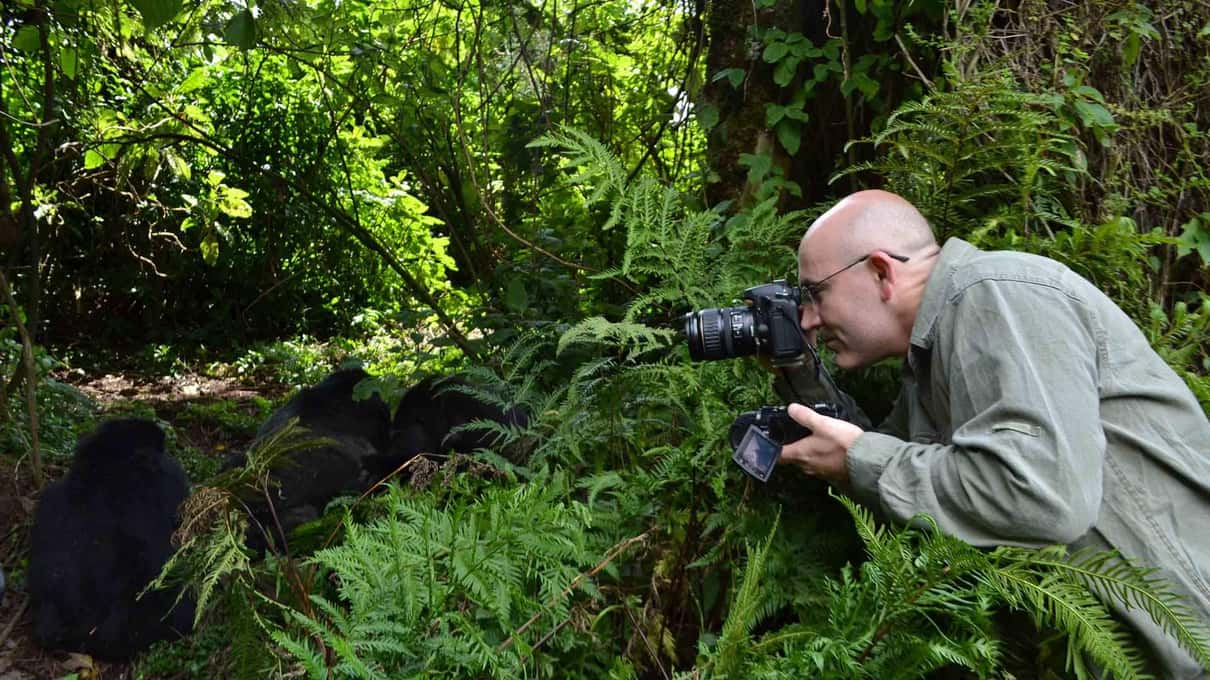
Bwindi Impenetrable National Park earns its name. Trails climb and drop steeply through thick vegetation, and the ground is often wet and muddy, even on days when the sky stays dry.
Stinging nettles grow along many slopes, and vines catch at ankles and wrists. Gloves and long sleeves help more than most first-timers expect, as our packing list for the forest explains.
Altitude adds to it. Bwindi lies at roughly 1,160–2,600 meters (3,800–8,500 feet), so a steep climb near the top of that range leaves you short of breath sooner than the same climb at home.
Bwindi and Mgahinga compared on foot
Mgahinga Gorilla National Park sits higher, on the slopes of the Virunga volcanoes near Kisoro. The ground there is more open, but the air is thinner, and with usually one habituated family there is no choice of group.
Bwindi has four trekking sectors and the most habituated families in Uganda. Many operators report that rangers try to match slower walkers to a family that is closer that day, so ask at the briefing, without counting on it.
Our comparison of Bwindi and Mgahinga covers the scenery and the extras in each park. For walking effort, the family's position on the day matters more than the park you pick.
Porters, sticks and pace
Porters wait at the park gate and can be hired for a set fee, paid locally. They carry your daypack and give you a hand on the steep or slippery stretches, which matters most on the way down.
Even fit walkers often take one, because a free pair of hands makes the muddy descents safer. A walking stick helps as well, and one is often handed out at the gate before you set off.
Keep a steady pace and drink often, rather than racing the first slope. Tell the ranger early if you need to slow down, because the group stays together the whole way.
Who should think twice
The GetYourGuide listing for Dav Safaris' three-day trip names the travelers it does not suit. The same warning fits any gorilla trek in Uganda, whoever runs it.
- People with back problems
- People with mobility impairments
- People with heart problems
If one of these applies to you, talk to a doctor and to the operator before you pay for a permit you may not be able to use. The trek has no shortcut once the family is far away.
The minimum age is 15, and nobody may trek while ill, since a cold can pass to the gorillas. Our page on the gorilla trekking rules covers the rest of what rangers expect.
The long day from Kigali
Kawira Safaris' day trip at ~$400 adds a strain of its own. The $800 permit is extra on that fare, and the effort starts before the walk, with a pre-dawn departure from Kigali and hours in the car.
The trek happens in Mgahinga, and then the drive and the border crossing repeat on the way back. If long car days drain you, a night near the park spreads the effort, as our Kigali day trip guide explains.
One long day, one gorilla hour
A private 4x4 with Kawira Safaris, Kigali to Mgahinga and back in one day, rated 4.9 from 26 reviews on GetYourGuide. Budget the $800 permit and the visa on top.
Our pick, Dav Safaris' three-day trip at ~$2,600, has long road days too, about seven hours from Entebbe on day one. The difference is that you sleep near Bwindi before the trek instead of starting it after a dawn drive.
Getting ready at home
You do not need to be an athlete, but steady uphill walking helps more than anything else. In the weeks before you fly, walk hills or stairs with a light pack, and break in the boots you plan to wear.
Practice walking downhill as well as up. Steep descents on wet ground tire the knees and thighs, and many trekkers find the way back harder than the climb to the family.
Waterproof boots with good grip matter more than any other gear on these slopes. Pack for rain whatever the month, and read our guide to when to trek for how the wet months change the trails.
Leave room in the day for rest after the trek. Most trips here drive on afterward, and tired legs on a bumpy road make the evening feel long.